MediCore AI
AI-powered multi-tenant clinic management platform
A healthcare SaaS I built from scratch: multi-tenant clinics, eight role-based dashboards and AI tools for symptoms, prescriptions and reports, with fallback across nine AI providers, on the web and Android.
- React 19
- Node.js
- Express 5
- Mongo
DB - Redis
- Bull
MQ - Vite 7
- Type
Script - Redux Toolkit
- RTK Query
- Mongoose
- JWT
- Supabase OAuth
- Stripe
- Cloudinary
- Web
Sockets - Capacitor
- Google Maps
- Open
Weather - Gemini
- Open
AI - Anthropic
- Deep
Seek - Groq
- Open
Router - Mistral
- Qwen
- Ollama
- Built at
- Final-year project — BSCS, FUUAST
- Sector
- Healthcare
- Region
- PK
- Period
- 2025 — 26
- Role
- Full stack developer — architecture, back end, front end and AI orchestration
- Team
- My Bachelor’s final-year project
- Web platform
- Back end
- AI
- Mobile
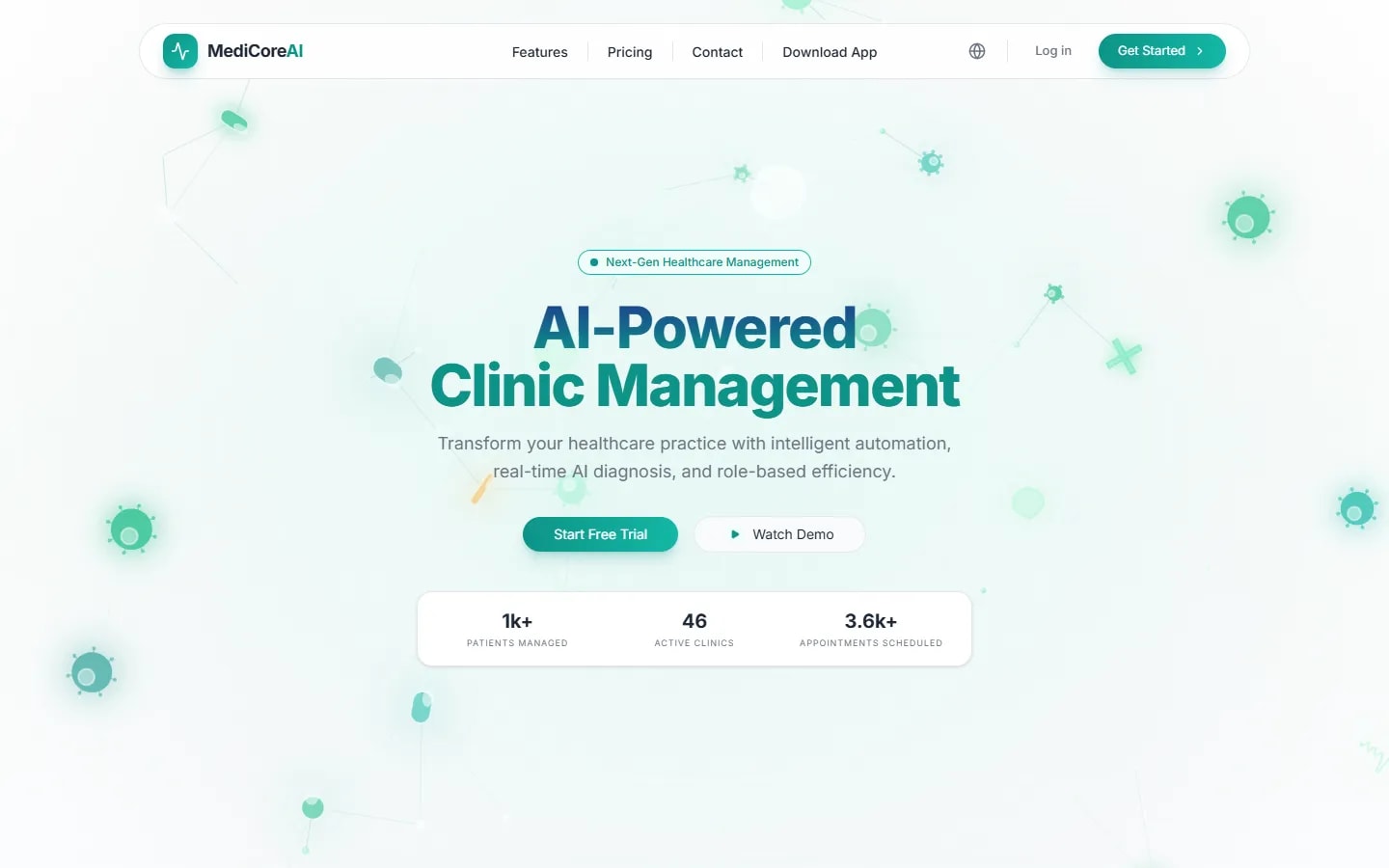
MediCore AI is a complete clinic management platform with artificial intelligence built into everyday care: one system for patients, doctors, clinic administrators and healthcare staff, on the web and on Android.
I built it from scratch as my Bachelor’s final-year project. Healthcare organisations register on the platform, open branches, onboard doctors and staff, and run their day-to-day work from it: appointments, electronic prescriptions, lab tests, pharmacy stock, patient records, billing and insurance. Each organisation’s data is kept apart from every other’s.
The AI sits inside the workflow, not in a chat window on the side: symptom assessment, prescription OCR and explanation, drug-interaction and risk flags, report analysis, a photo-based skin and rash checker, a pill identifier and disease-outbreak prediction. An AI feature is only useful when it answers, so every call goes through an orchestration layer that falls back across nine providers.
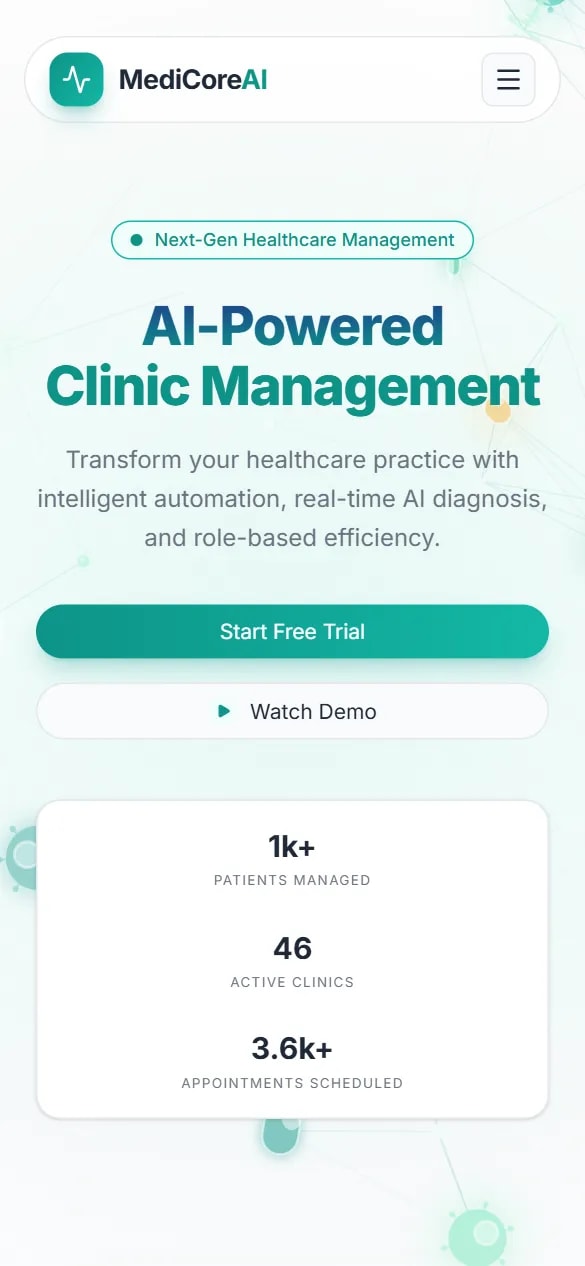
The Android app is the same React code packaged with Capacitor, so the web and mobile apps ship together from one codebase.
- Op 01
Designed a multi-tenant SaaS architecture: clinic registration, branches, staff and doctor onboarding, with every tenant’s data isolated.
- Op 02
Built role-based access control for eight roles (Patient, Doctor, Receptionist, Lab Technician, Pharmacist, Caregiver, Clinic Admin and Platform Admin), each with its own dashboard, permissions and workflows.
- Op 03
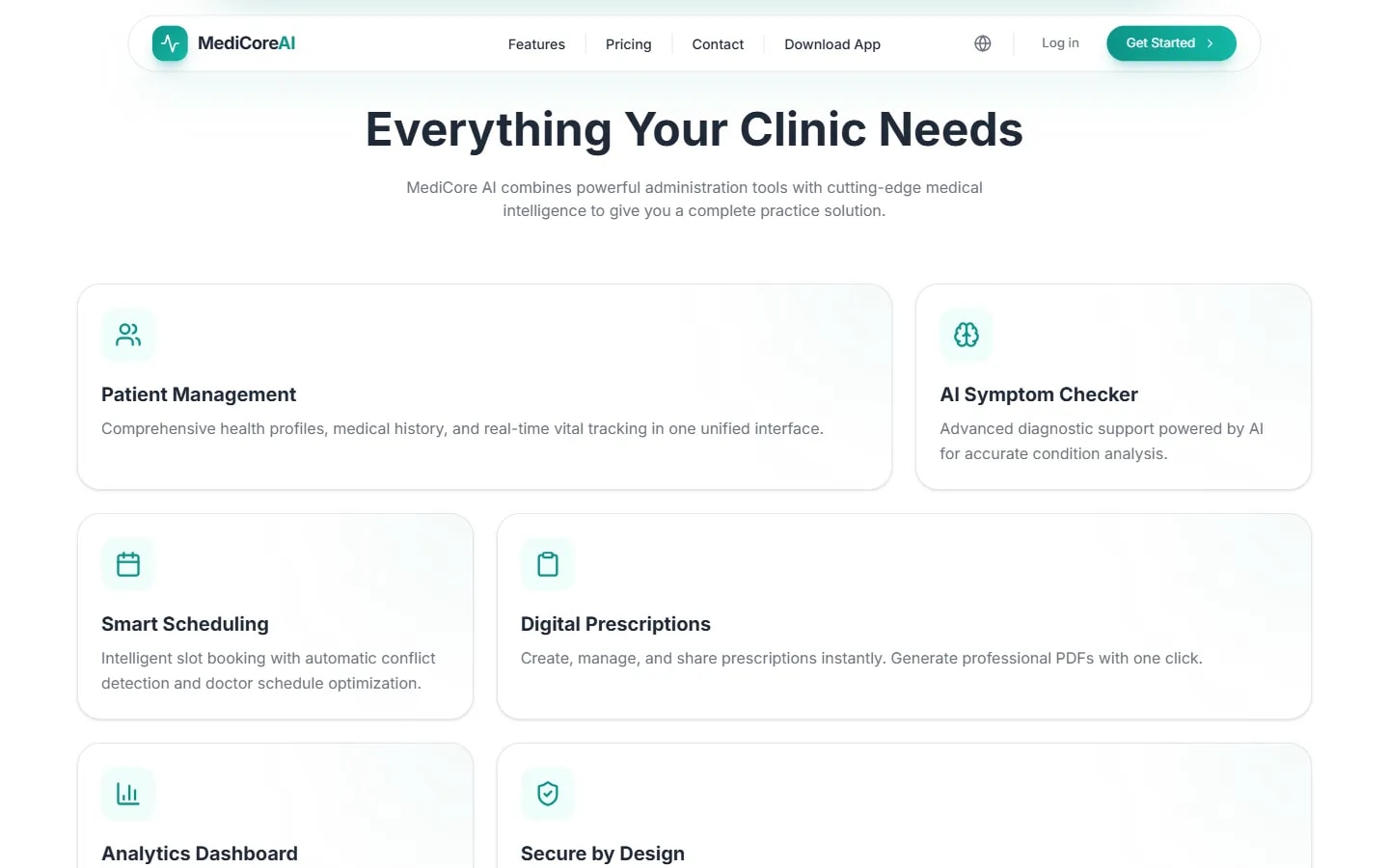
Wrote the Node.js and Express 5 REST API and the MongoDB data model behind appointments, e-prescriptions, the laboratory, pharmacy inventory, health records, billing, insurance, referrals and clinic subscriptions.
- Op 04
Built the AI features (symptom assessment, prescription OCR, drug-interaction and risk flagging, report analysis, skin and rash checker, pill identifier, outbreak prediction and a chatbot with role-specific personas) behind one orchestration layer with fallback across nine AI providers.
- Op 05
Secured sign-in with JWT and Supabase OAuth for Google and Microsoft accounts, with audit logging for clinical data.
- Op 06
Moved slow work into background jobs with Redis and BullMQ, and pushed real-time updates and notifications over WebSockets.
- Op 07
Integrated Stripe for subscription billing, Cloudinary for files and images, Google Maps to find nearby care and OpenWeather for weather-based health alerts.
- Op 08
Built the React 19 front end with Redux Toolkit and RTK Query, and shipped it to Android with Capacitor from the same codebase.
- A working healthcare SaaS, live on Vercel, with a native Android app built from the same React code.
- 8 role-based dashboards in one platform, each with its own permissions and workflows.
- AI that keeps answering when a provider fails: 9 providers behind one fallback layer.
- 8user roleseach with its own dashboard, permissions and workflows
- 9AI providersone orchestration layer with automatic fallback
- 2platforms, one codebaseweb and Android, through Capacitor
Under the hood
- Web app (React 19)→REST API (Node.js · Express 5)
- Android (Capacitor)→REST API (Node.js · Express 5)
- REST API (Node.js · Express 5)→Sign-in (JWT · Supabase OAuth)
- REST API (Node.js · Express 5)→Tenants & roles (8 role dashboards)
- REST API (Node.js · Express 5)→Redis + BullMQ (background jobs)
- REST API (Node.js · Express 5)→AI router (9 providers, fallback)
- Tenants & roles (8 role dashboards)→MongoDB (clinical data)
- Redis + BullMQ (background jobs)→Stripe · Cloudinary (billing and files)
From the live site